
The importance of steel ball grinding in mining operations
Sep 26,2021
Different manufacturing processes of steel balls determine their different qualities. The quality of steel balls affects both the level of productivity and the level of ball consumption, and thus the size of the ore dressing cost. At present, most of the steel balls used in concentrators are cast steel balls and forged steel balls. Cast steel balls can be divided into three categories: low-chromium steel balls, high-chromium steel balls, and high-alloy steel balls. Their production process is generally: Raw materials → Heating and melting → Steel mold casting → Demolding and polishing → Quenching → Tempering → Inspection and packaging; The production process of forged steel balls is generally: Raw materials → Blanking → Medium-frequency furnace heating → Forging into balls → Quenching → Tempering → Inspection and packaging.
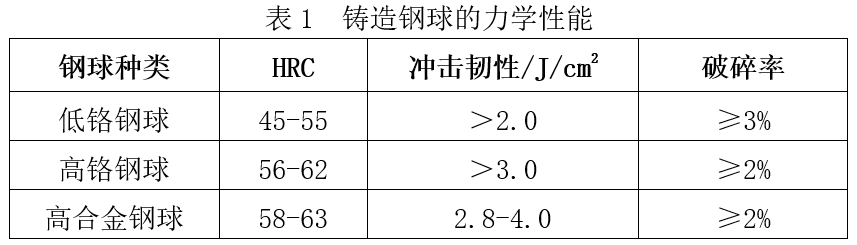
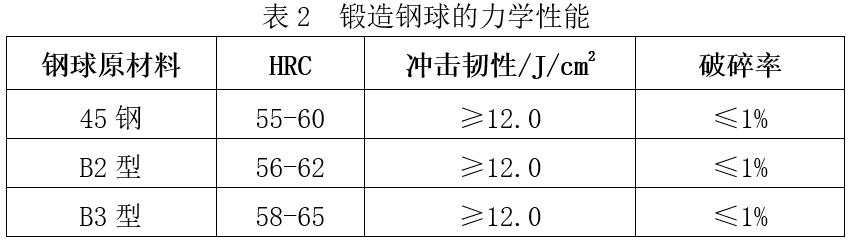
Cast steel balls can be produced using waste materials, while forged steel balls must use qualified bars, so the raw material cost of forged steel balls is higher. However, comparing the mechanical properties of cast steel balls and forged steel balls in Table 1 and Table 2, The impact toughness and breakage rate of forged steel balls are superior to those of cast steel balls, and the breakage rate of forged steel balls is also lower than that of cast steel balls in actual use.
The principle of selecting steel balls is high hardness, no breakage, and high cost performance. Especially the cost performance, It is not the cheaper the better. If the wear is fast and the breakage rate is high, The indirect costs caused by wear and breakage will far exceed the direct benefits brought by low prices The comprehensive benefits are lower. Therefore, it is necessary to select the appropriate steel ball material according to the mill specifications and ore properties.
2. Steel ball filling rate
The steel ball filling rate in the mill determines the strength of the grinding effect. Intuitively, More balls, more strikes, stronger grinding effect; conversely, fewer balls, fewer strikes, weaker grinding effect. However, if the steel ball filling rate is too low, the impact energy will be insufficient, and the ore cannot be effectively crushed and ground. If the filling rate is too high, the space in the cylinder will be narrow, and the objects will contact each other too frequently, which will reduce the impact efficiency. Therefore, it is necessary to choose the appropriate steel ball filling rate to ensure the working efficiency of the mill. When the operating conditions of the grinding operation, including mill size, grinding concentration, and rotational speed, are constant, the filling rate depends on the size and hardness of the ore particles. When the ore properties change, the steel ball filling rate should also change accordingly. The standard for whether the filling rate is appropriate is the size of the mill productivity. The filling rate corresponding to the maximum productivity found through experiments is the optimal filling rate.
For example, a copper-gold mine in Indonesia increased the steel ball filling rate from 14% to 18%, and the mill throughput increased by 5%~10%. Currently, the steel ball filling rate of this mine is stable at 16%~18%. However, increasing the steel ball filling rate will increase the particle size of the product. This should be noted during system optimization, because the increase in the particle size of the semi-autogenous grinding mill product will increase the grinding load of the subsequent ball mill.
3. Size of steel balls
In grinding operations, steel balls can produce both impact and abrasion effects on ore particles. If the steel ball diameter is too small, the impact crushing effect on the ore is weak, which affects the production efficiency of the mill; increasing the steel ball diameter can increase the impact crushing energy of the steel ball on the unit ore and improve the crushing effect of the ore, but Under the same steel ball filling rate, increasing the steel ball diameter will correspondingly reduce the number of steel balls, and the frequency of ore crushing will be reduced, that is, the frequency of ore crushing will be reduced. Therefore, the appropriate steel ball size should be determined according to the actual operating conditions In addition, increasing the steel ball diameter while increasing the ore processing capacity will also increase the particle size of the semi-autogenous grinding mill product, increase the impact force on the mill liner, and reduce the service life of the liner. This should be paid special attention to when optimizing the steel ball diameter.
For example, after the properties of the ore entering the Meishan concentrator mill changed, φ100mm steel balls were used instead of the original φ120mm steel balls. While maintaining the same hourly throughput, the annual electricity cost savings were 492,300 yuan, and the steel ball procurement cost savings were 166,300 yuan, resulting in annual production cost reduction of 658,600 yuan, and the service life of the mill liner was extended, and the noise was reduced, with significant economic and environmental benefits.
4. Steel ball ratio
A certain amount of steel balls needs to be added to the mill regularly during operation to complete the grinding operation. Because the particle size of the raw ore entering the mill is composed of several particle sizes, it is not possible to add steel balls of one size, but to divide the several particle size levels of the raw ore into various corresponding sizes of steel balls to complete the operation, in order to achieve the best efficiency. In actual grinding operations, if the steel ball size is too large, the impact force will be too large, and "penetrating crushing" and over-crushing will easily occur; if the steel ball size is too small, the impact force will be insufficient, resulting in coarse and unrefined grinding products. Therefore, during production operation, it is necessary to adjust the most suitable steel ball replenishment plan according to the raw ore properties and particle size composition levels. Yunnan Phosphate Group Anning Mining has improved the steel ball replenishment plan, ensuring the single-body dissociation degree of the grinding product, effectively reducing the over-grinding amount of the grinding product, and significantly improving grinding efficiency and production capacity.
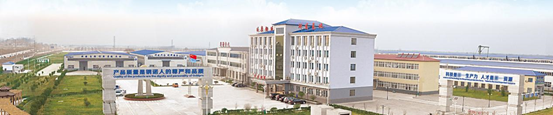
Gangnuo New Materials Co., Ltd. sincerely invites friends from all walks of life to visit, guide, and exchange!