
Six Unmissable Trends in Future Mining!
Nov 03,2020
With the development of industry, the demand for mineral resources continues to increase. Currently, both developed and developing countries consider acquiring and developing resources as strategic measures. Therefore, a large number of efficient, safe, and low-cost mining technologies and methods have emerged in mining development, requiring close adherence to advanced technologies to effectively develop resources.

(I) Intelligence of Underground Mines
Currently, underground mines worldwide are pursuing efficiency and safety, leading to continuous improvements in mechanization and automation levels.
Taking the Kiruna iron ore mine in Sweden as an example. The Kiruna iron ore mine is famous for producing high-grade iron ore (with an iron content exceeding 70%) and is currently one of the largest iron ore mines in the world. Its iron ore mining has a history of more than 70 years, and it has now shifted from open-pit mining to underground mining. The intelligence of the Kiruna iron ore mine primarily benefits from the investment in large mechanical equipment, intelligent remote control systems, and a modern management system. Highly automated and intelligent mining systems and equipment are key to ensuring safe and efficient mining.

1) Development. The Kiruna iron ore mine uses a combined development of shafts + ramps. The mine has 3 shafts for ventilation and hoisting ore and waste rock. Personnel, equipment, and materials are mainly transported from the ramps using trackless equipment. The main hoisting shaft is located in the footwall of the ore body. So far, the mining face and main transportation system have moved down 6 times, and the current main transportation level is at 1045m.
2) Drilling, charging, and blasting. Tunnel excavation uses jumbo drills, equipped with a 3D electronic measuring device for precise drill hole positioning. Stope drilling uses the SimbaW469 remote-controlled drilling jumbo produced by Atlas Copco of Sweden, with a hole diameter of 150mm and a maximum hole depth of 55m. This jumbo uses a laser system for accurate positioning, is unmanned, and can operate continuously for 24 hours. The annual blasted ore volume can reach 3 million tons.
3) Remote ore loading, transportation, and hoisting. In the Kiruna iron ore mine, stope drilling, loading and hauling, and hoisting have all achieved intelligent and automated operations. Both drilling jumbos and LHDs have achieved unmanned operation. Ore loading uses the Toro2500E remote-controlled LHD, with a single unit efficiency of 500 t/h. The underground transportation system has two types: belt conveyor and rail automatic transportation. Rail automatic transportation usually consists of 8 ore cars, which are automated bottom-dump cars for continuous loading and unloading. The belt conveyor automatically transports ore from the crushing station to the weighing device, completing loading and unloading with the shaft skip. The entire process is remotely controlled.
4) Remote-controlled concrete spraying and support reinforcement technology. Roadway support adopts a combined shotcrete-bolt-mesh support, completed by a remote-controlled concrete spraying machine. Rock bolts and steel mesh are installed using a bolting jumbo.

(II) Increasingly Widespread Application of Leaching Technology
Currently, leaching technology is widely used in the recovery of low-grade copper, gold, and uranium ores. There are three main types of leaching technology: in-situ leaching, heap leaching, and in-situ crushing leaching.
Countries such as the United States, Canada, and Australia primarily use heap leaching and in-situ blast leaching for the recovery of low-grade copper ore (0.15%~0.45%), copper oxide ore (over 2%), and uranium ore (0.02%~0.1%).
Taking the United States as an example, there are more than 20 mines in the US that use in-situ blast leaching for copper. For instance, the Mike Mine in Nevada and the Zonia Copper Mine in Arizona both produce over 2.2 tons of copper per day. The Butte Mine and the Copper Queen Branch Mine in Montana produce 10.9~14.97 tons of copper metal per day. Leaching accounts for over 20% of total copper production, over 30% of gold production, and the vast majority of uranium production in the United States.
(III) Deep Mine Mining Technology
As resource volumes continuously decrease, mining depths are becoming increasingly greater, extending below 1000m. This brings many difficulties and problems not encountered in shallow mining, such as increased ground pressure and elevated rock temperature. Concurrently, challenges related to hoisting, dewatering, support, and ventilation also increase.
Common problems in deep mines:
1) Hoisting capacity. As mining depth increases, the first challenge encountered is the hoisting capacity of the mine. Current hoists can lift materials to a maximum height exceeding 2000m. For example, the deepest single-hoist mine in Canada has reached a depth of 2172m, and a shaft in a South African gold mine has reached 2310.4m. Currently, hoisting equipment capabilities fully meet the requirements of large-scale deep mines.
2) Rock temperature and ventilation cooling. As mining depth increases, rock temperature also rises. For instance, in the Toyoha Copper-Zinc Mine in Japan, the rock temperature at the -600m level (approximately 1200m below the surface) has exceeded 100℃, yet many countries worldwide stipulate that underground temperatures must not exceed 28℃. Deep mines commonly increase underground ventilation air volume and cool the underground air, using both air cooling and water cooling. Whether one or both methods are chosen, in addition to lowering the air temperature, it is also important to reduce the heat dissipation from underground mechanical equipment, underground diesel equipment, and the refrigeration equipment itself.
3) Ground pressure management and mining methods. Deep mines generally establish a complete ground pressure measurement and monitoring system, which directly relates to the smooth progress of mining production and the level of production costs. Rockbursts are prominent problems encountered in deep mining. To predict rockbursts, many mines install microseismic monitoring devices underground. For example, the Sunshine Silver Mine in the United States installed a microseismic monitoring device at the 2254m level for 24-hour monitoring.
4) Spontaneous combustion and spontaneous explosion. Deep mining can also encounter phenomena such as spontaneous combustion of sulfide ore due to high ore temperatures and spontaneous explosions during explosive charging, which also requires sufficient attention.
At present, the mining depth of non-coal mines in China generally does not exceed 700~800m. However, in recent years, some deposits with burial depths of around 1000m are being developed, including the Dongguashan Copper Deposit of Tongling Nonferrous Metals Company and the Jinchuan No. 2 Mining Area.
(IV) Mine Environmental Protection Work
In foreign countries, especially developed countries, comprehensive measures are adopted for the treatment of mining environments. There are strict technical standards for mine wastewater, waste gas, tailings, dust, noise, etc. Many low-grade mines cannot be built and put into production due to the high cost of environmental protection.
At present, foreign countries also emphasize the establishment of zero-waste mines and clean mines. The Walsum coal mine in the Ruhr industrial area of Germany is a successful example. The coal slime from the coal washing plant, the coal ash after coal-fired power generation, and the crushed underground waste rock are added to cement, activated and stirred, and transported to the underground area by a PM pump to fill the void. The mine does not discharge any solid waste to the outside.

(5) Filling Mining Technology
Different filling materials are used depending on the situation:
1) Regional support. High-quality rigid filling materials should be used to reduce the hazards of elastic volume closure and rock bursts.
2) Stratum control. The quality requirements for filling materials are not strict, but large-scale filling is required, and the filling should not shrink after filling.
3) Multi-vein mining. The requirement for filling materials is that under a lower stress state, the filling material should be rigid to minimize rock layer deformation and displacement.
4) Environmental control. In order to ensure that the hanging wall is sealed to prevent air flow through the goaf, it is required that the filling material does not shrink and large-area filling is carried out.
5) Reduce waste rock hoisting. Prepare and crush waste rock underground as filling material to improve efficiency.
Current issues to consider for filling:
1) It is necessary to concentrate efforts to form a practical and reliable system. Effective filling technologies should be researched and developed to effectively combine filling operations and mining operations. The management of the filling system should be valued.
2) Research technologies that can optimize existing systems, Research the particle size distribution of high-quality filling materials, research the filling material preparation process that has been improved in the aspects of hydrocyclones and crushing, and research the transportation technology used to optimize filling materials, such as pressure loss, wear, and corrosion, to optimize the overall design of the filling system.
3) Strengthen the quantitative understanding of the preparation, transportation, filling, and loading and deformation processes of filling materials to lay the foundation for safe, stable, and efficient mining. Currently, internationally used filling processes include: water-sand filling, dry filling, high-water solid filling, and cemented filling. Cemented filling is further divided into: segmented tailings hydraulic filling (high-concentration self-flowing transportation), other filling material hydraulic filling (high-concentration self-flowing transportation), full tailings slurry self-flowing filling, and full tailings slurry pumping filling. Currently, full tailings slurry pumping filling is recommended internationally.
At present, 12 mines in Canada have applied high-concentration slurry filling, and new slurry filling systems have also been put into production in South Africa and Australia. The new filling technology will better meet the requirements of resource protection, environmental protection, efficiency improvement, and ensuring mine development. Filling mining will have a broader prospect in the development of the mining industry in the 21st century.
(6) Deep-sea polymetallic nodule mining
Polymetallic nodules are located in the seabed at a depth of about 3000-5000m. Mining requires feasible mining methods. Therefore, countries around the world have prioritized the development of reliable mining methods and conducted extensive experimental research, some even conducting deep-sea intermediate mining experiments. Since the late 1960s, the ocean mining methods developed and tested internationally have been mainly divided into three categories: continuous bucket line (CLB) mining method, seabed remotely operated vehicle (ROV) mining method, and fluid lifting mining method.
1) Continuous bucket line (CLB) mining method. This method was proposed by the Japanese in 1967. This method is relatively simple, mainly composed of a mining vessel, towing cable, bucket, and tugboat. At a certain interval, the bucket is tied to the towing cable and placed on the seabed. Under the transportation of the tugboat, the towing cable carries the bucket to perform downward, scooping, and upward movements. This stepless rope-type cyclic operation constitutes a continuous collection loop. The main feature of CLB is that it can adapt to changes in water depth and maintain normal operation. However, the output of the CLB method can only reach 100t/d, which is far from meeting the requirements of industrial mining. Therefore, the CLB mining method was abandoned in the late 1970s.
2) Seabed remotely operated vehicle (ROV) mining method. This method was mainly proposed by the French. The seabed ROV is an unmanned underwater mining vehicle, mainly composed of four major systems: ore collecting mechanism, self-propulsion, buoyancy control, and ballast. Under the monitoring of the surface mother ship, the mining vehicle dives to the seabed to collect nodules according to instructions. After the nodules are full, it floats to the surface and goes to the mother ship to unload the nodules. The surface mother ship can usually control several mining vehicles to operate simultaneously. This method has a large investment in the mining system and low product value. Without economic benefits for decades, the French Ocean Nodule Research and Development Association stopped research in 1983, but the mining and transportation principle of this mining vehicle is considered a promising collection technology.
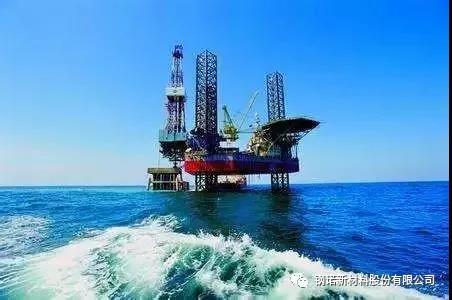
3) Fluid lifting mining method. Currently, the fluid lifting mining method is more internationally recognized and has the most promising industrial application prospects. After the mining vessel arrives at the mining area, the ore collector and lifting pipe are connected and gradually placed into the sea. The ore collector is used to collect nodules from the seabed sediments and conduct preliminary processing. The water in the pipe is moved upward at a sufficient speed by hydraulic or pneumatic lifting, transporting the nodules to the surface mining vessel.
With the arrival of the 21st century, human beings will develop and utilize the ocean, and deep-sea mining technology is particularly important. The development of modern high and new technologies has laid a bridge for the development of deep-sea resources. Its formation and development will have a positive and profound impact on the world's ocean economy, culture, and human ocean awareness.
In addition to the six aspects mentioned above, the development trend of mining technology in foreign mines also includes the increasingly perfect natural caving mining technology, and its application is constantly expanding. In addition, a large number of new technologies have emerged in rock drilling and blasting, and mine rock mechanics and engineering have become an independent discipline. It plays an increasingly important role in mine construction and production.