
Tailings pond composition, types, characteristics and site selection principles! So comprehensive!
Feb 03,2021
A tailings dam is a structure built to block a valley mouth or enclose an area for storing tailings or other industrial waste discharged after ore beneficiation in metal or non-metal mines. The constructed system for tailings treatment is called tailings facilities. This article introduces the composition, types, characteristics, and site selection principles of tailings dams.
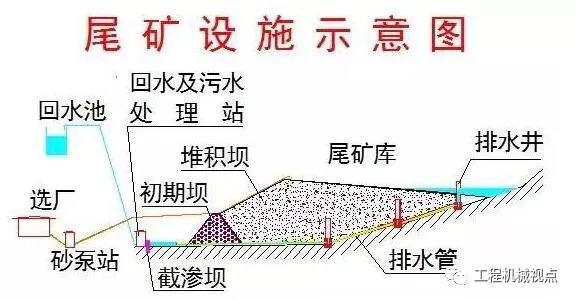
Tailings dams generally consist of several parts: tailings storage system, tailings dam flood discharge system, and tailings dam return water system.
1. Tailings Storage System
This system generally includes pipelines for tailings discharge on the dam, initial tailings dam, later tailings dam, seepage line observation, displacement observation, and drainage facilities.
2. Tailings Dam Flood Discharge System
This system generally includes structures such as diversion ditches, spillways, drainage wells, drainage pipes, and drainage tunnels.
3. Tailings Return Water System
This system mostly uses drainage wells and pipes in the reservoir to introduce clear water into the downstream return water pumping station, and then lift it to a high-level water pool. Some also set up mobile pumping stations at the edge of the water surface in the reservoir to directly extract clear water and lift it to a high-level water pool.
1. Tailings dams are indispensable facilities for mining and beneficiation plants
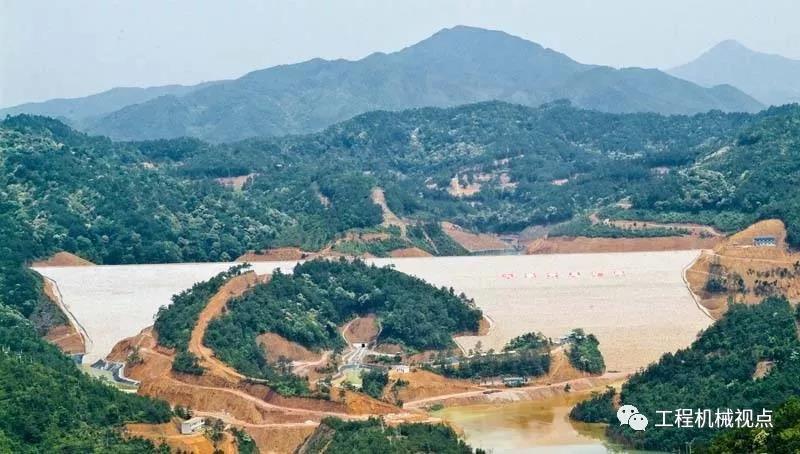
Tailings dams are the largest environmental protection projects of mining enterprises. They can prevent tailings from being arbitrarily discharged into rivers, lakes, seas, deserts, and grasslands. As long as a mine produces tailings, it must have a tailings dam. Therefore, tailings dams are an indispensable part of mining and beneficiation plants.
2. High Construction Cost of Tailings Dams
The capital investment of tailings dams generally accounts for more than 10% of the total investment in mine construction and about 20% of the investment in beneficiation plants. In some cases, it is almost close to or even exceeds the investment in beneficiation plants. The operating cost of tailings facilities is also high. In some mines, the operating cost of tailings facilities accounts for more than 30% of the production cost of the beneficiation plant. In order to reduce operating costs, the location of some mining and beneficiation plants depends on the location of the tailings dam.
3. Tailings Dams are the Biggest Source of Danger in Mining Enterprises
A tailings dam is a source of danger with high potential energy for artificial debris flows. For more than ten years or even decades, various natural (rainwater, earthquakes, rat holes, etc.) and man-made (poor management, poor coordination between industry and agriculture, etc.) unfavorable factors constantly or periodically threaten its safety. Facts have repeatedly shown that once a tailings dam fails, it will cause huge disasters and losses to industrial and agricultural production and the lives and property of people downstream.
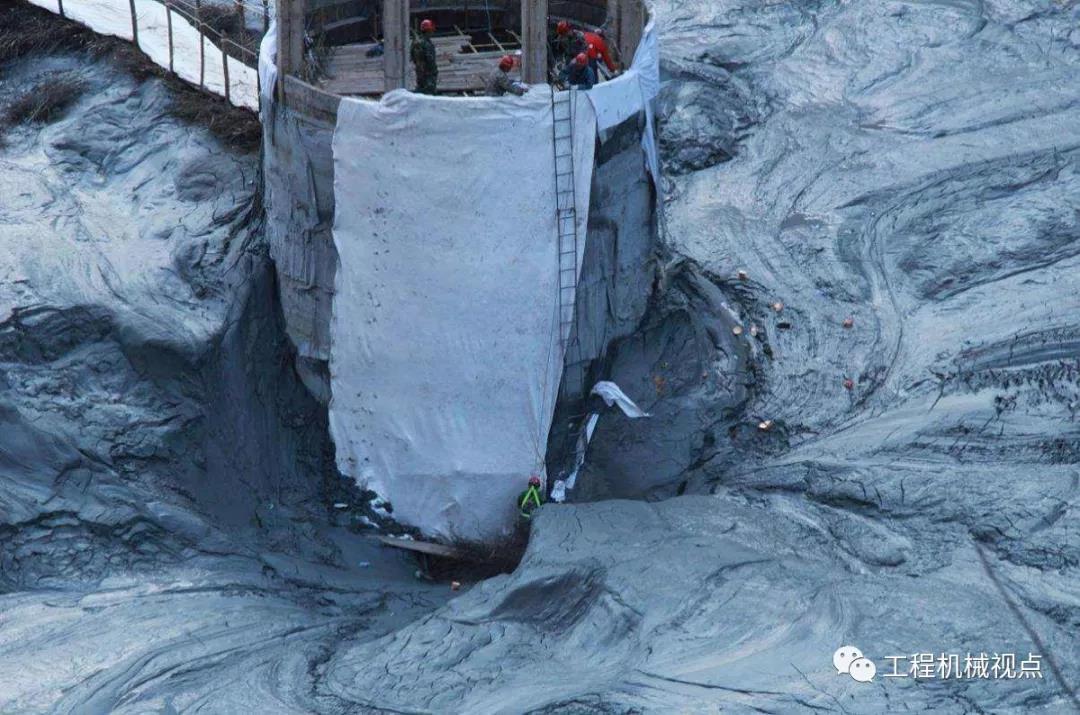
Leaked Tailings Dam
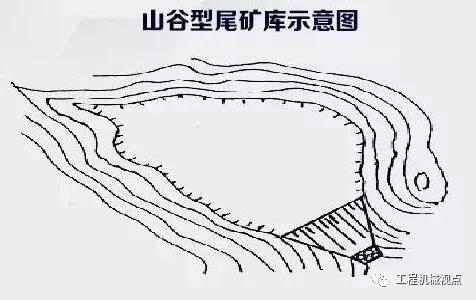
1. Valley-type Tailings Dams
Valley-type tailings dams are formed by building dams at the mouth of valleys. Their characteristics are that the initial dam is relatively short, the dam body engineering volume is relatively small, the later tailings dam is relatively easy to manage and maintain, and when the dam is higher, a larger reservoir capacity can be obtained; the longitudinal depth of the reservoir area is longer, and the tailings water clarification distance and dry beach length are easy to meet the design requirements; however, when the catchment area is large, the flood discharge facilities have a relatively large engineering volume. Most of the large and medium-sized tailings dams in China belong to this type.
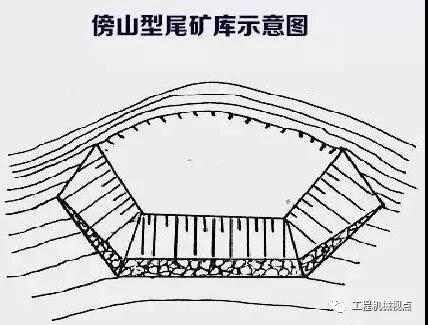
2. Hillside Tailings Dams
Hillside tailings dams are tailings dams enclosed by building dams at the foot of hillsides. Their characteristics are that the initial dam is relatively long, and the initial dam and later tailings dam have a large engineering volume; due to the short longitudinal depth of the reservoir area, the tailings water clarification distance and dry beach length are limited, and the height of the later dam is generally not very high, so the reservoir capacity is small; although the catchment area is small, the flood control capacity is low, and the water intake structure of the flood discharge facilities is large; due to the poor tailings water clarification conditions and flood control conditions, management and maintenance are relatively complex. Small and medium-sized mines in low-mountain and hilly areas in China often choose this type of tailings dam.
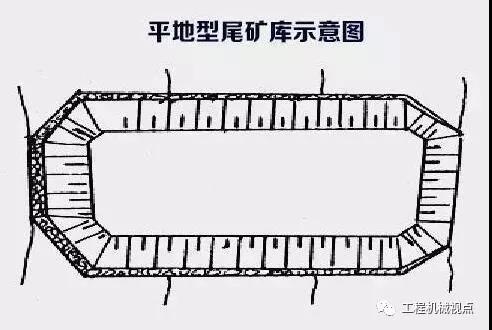
3. Plain Tailings Dams
Plain tailings dams are tailings dams enclosed by building dams around flat terrain. Their characteristics are that the initial dam and later tailings dam have a large engineering volume, and maintenance and management are more troublesome; due to the surrounding dams, the reservoir area is getting smaller and smaller, and the slope of the tailings sedimentation beach is getting gentler and gentler, so the clarification distance, dry beach length, and flood control capacity are all reduced, and the dam height is limited and generally not high; however, the catchment area is small, and the drainage structure is relatively small; this type of tailings dam is often used in plains or desert gobi areas in China.
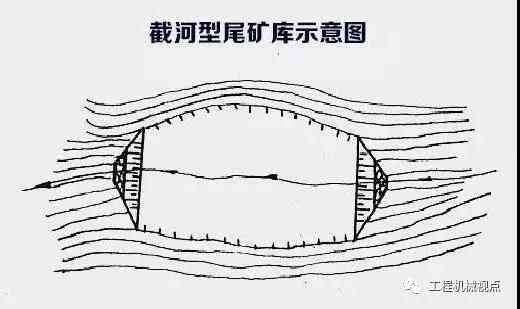
4. River Intercepting Tailings Dams
River intercepting tailings dams are formed by intercepting a section of riverbed and building dams at both the upstream and downstream ends. Some leave a certain width of water flow on the wide and shallow riverbed, and build dams on three sides to form a tailings dam, which also belongs to this category. Its characteristics are that it does not occupy farmland; the catchment area of the reservoir area is not very large, but the catchment area upstream of the tailings dam is usually very large, and drainage systems must be set up in the reservoir and upstream of the reservoir, which is relatively complex and large-scale. This type of tailings dam is more complex to maintain and manage, and is not widely used in China.
Correctly selecting the location of a tailings dam is extremely important. During design, multiple locations are generally selected for technical and economic comparison to determine the final location. The following principles should be considered comprehensively when searching for a location:
1. The reservoir capacity of a tailings dam should be able to accommodate the total amount of tailings for the entire production period. If there are difficulties, the service life should be no less than five years.
2. The location should be close to the beneficiation plant, preferably downstream. This can shorten the tailings transportation distance, reduce the lift, and reduce the adverse impact on the beneficiation plant.
3. It should be located as far as possible downstream of large residential areas, water sources, aquaculture bases, and key protected scenic spots.
4. It should avoid or minimize the occupation of farmland and relocation of villages.
5. It should not be located above a mine with mining value without technical verification.
6. The catchment area of the reservoir area should be small, the longitudinal depth should be long, and the longitudinal slope should be gentle. This can reduce the scale of the flood discharge system.
7. The mouth of the reservoir area should be small, and the "belly" should be large. This can reduce the engineering volume of the initial dam and increase the reservoir capacity.
8. Try to avoid areas with unfavorable geological phenomena to reduce handling costs.