
The decreased output and low production efficiency of the ball mill are all due to "it"; if it's not handled soon, it will be too late!
Sep 14,2020
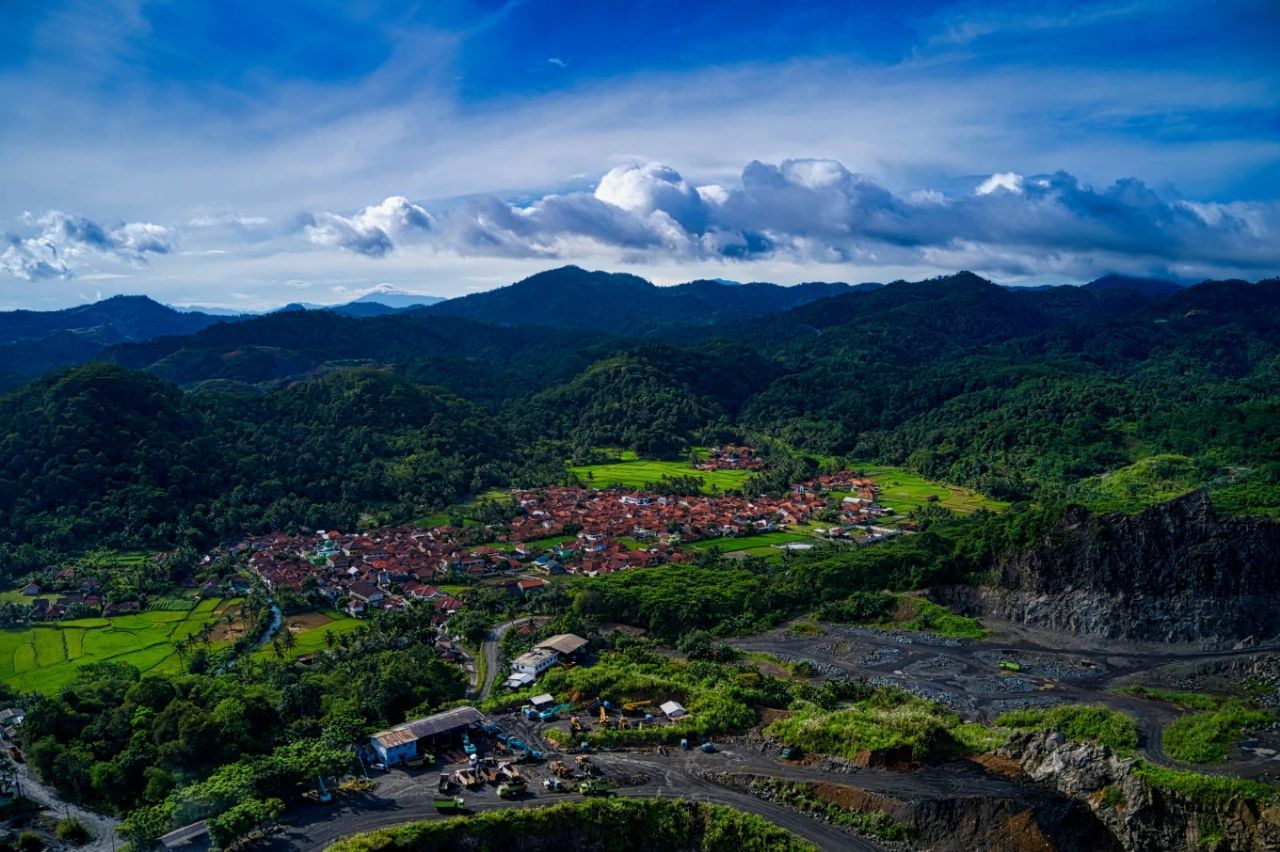
It is well known that mining a mountain requires a lot of money. Buying the mountain requires money, paying taxes requires money, obtaining permits requires money, equipment requires money, and hiring people requires money. These investments have already exhausted mining enterprises, and if they encounter substandard production efficiency and frequent equipment failures during mining, it will make mining enterprises even worse. Therefore, how to reduce costs and increase efficiency has become the most headache-inducing issue for many mine owners.
However, many mine owners have taken many detours in the process of reducing costs and increasing efficiency, mistakenly believing that reducing costs and increasing efficiency means dismissing employees, making employees work under high pressure, reducing employee benefits, or blindly purchasing advanced equipment without considering the actual situation of the mine. These measures may temporarily create an illusion of cost reduction, but they absolutely cannot increase efficiency, and instead will have negative effects.
Employee strikes, equipment wear and tear, exorbitant environmental fines, mine shutdowns... these negative impacts further increase the company's investment. Therefore, to truly reduce costs and increase efficiency, you must find the right method.
In mining, there is a production process that determines the quality of the final product, and that process is grinding. Good grinding can reduce equipment wear and tear, lower power consumption, improve ore grade, and improve production efficiency. To fully realize these advantages, the grinding balls and mill conditions must match. But what should we do if they don't match?
Today, Stone Brothers will share with you the possible problems and analysis when the grinding balls and mill conditions do not match.
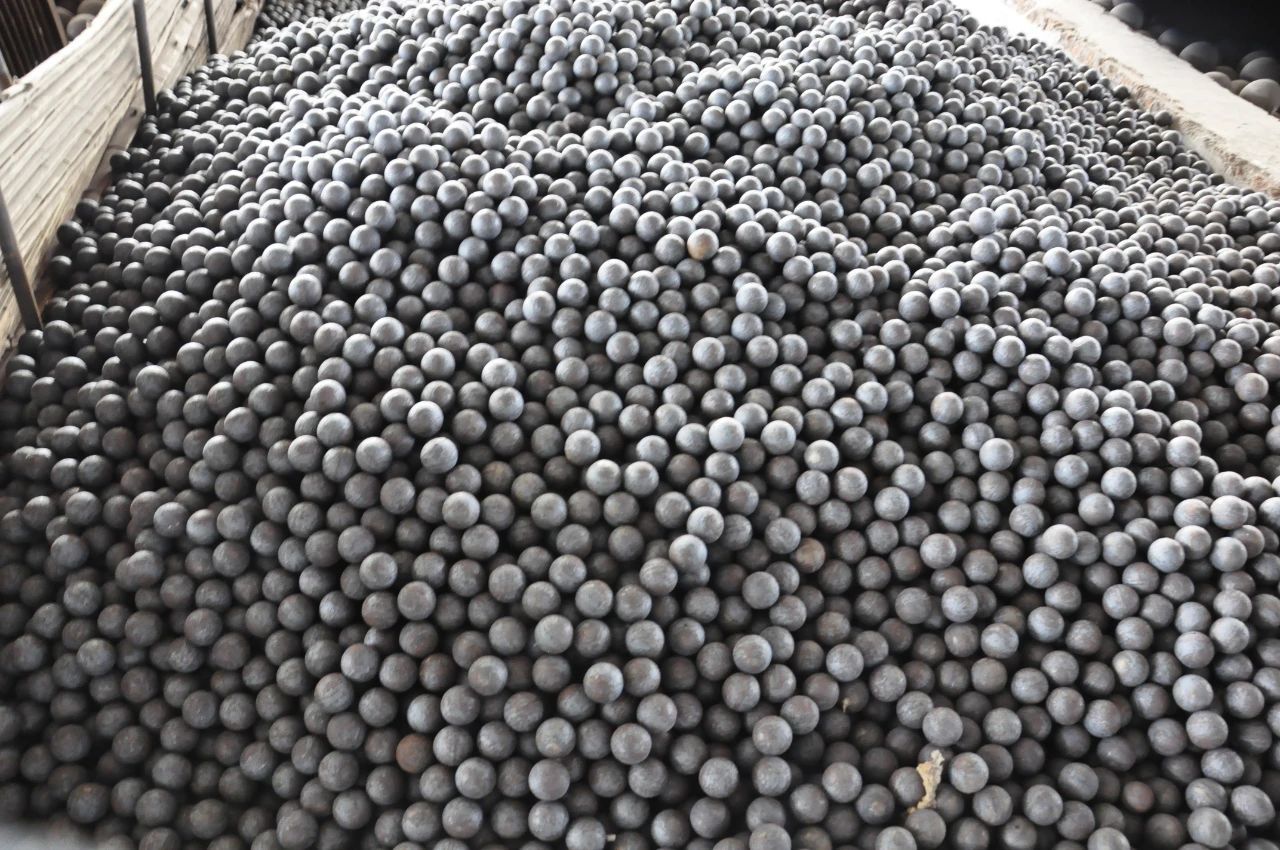
1. High unit consumption, that is, relatively more grinding balls are consumed per ton of ore processed
The performance is that the hardness design of the grinding balls is unreasonable, and its hardness does not match the F value of the ore being ground. One situation is that the hardness of the grinding balls is lower than the hardness of the ore by more than 3HRC, and it is worn faster during the crushing and grinding process, increasing consumption. The second situation is that when the ore hardness is high, when the steel ball hardness is higher than the ore hardness by 3HRC, during the crushing and grinding process, the steel ball and the ore produce sliding wear, weakening the grinding effect, resulting in increased useless work, reduced ore processing capacity, and higher grinding temperature, and the unit consumption is relatively increased. Furthermore, if the hardness of the grinding balls is too high, the fatigue life is shortened, and during the crushing and grinding process, collisions between the ore, individual steel balls, and occasional collisions with the lining will accelerate the mechanical hardening phenomenon of the grinding balls, often causing peeling, chipping, or even cracking and breakage, resulting in premature failure and higher unit consumption. Therefore, when the hardness ratio of grinding balls and ore is 1:1, the unit consumption is the highest (such as grinding balls). According to the nature of the ore, the hardness of the wear-resistant steel balls should be controlled within a deviation of 1-3HRC from the ore hardness.
2. Breakage, affecting normal grinding
There are many factors that cause grinding balls to break, including intrinsic factors such as: substandard raw material inclusions, mismatch between raw material composition and hardenability and ball diameter, large temperature deviation during forming, unreasonable deformation ratio, improper heat treatment process, etc. Regardless of the factor, once breakage occurs, it will inevitably affect the normal grinding effect, reduce ore processing capacity, and fail to meet the grinding fineness standards (under-grinding or over-grinding). According to ideal calculations, one steel ball corresponds to one piece of ore doing work. If one steel ball breaks, it will cause two other normal steel balls to do useless work. For example, in an 11.0*6.3m semi-autogenous mill using φ140mm grinding balls, the daily consumption is 26 tons, and the breakage rate is about 4%, with 92 steel balls breaking every day, causing 184 normal steel balls to do useless work, resulting in a total of 276 steel balls not doing work to process ore, accounting for 11.94% of the total number of steel balls, significantly affecting the ore processing capacity and fineness. Secondly, external reasons: the hardness design of the steel balls does not match the operating conditions. Every operating condition has a most suitable matching medium hardness. When the deviation is large, either premature failure due to breakage or high unit consumption occurs.
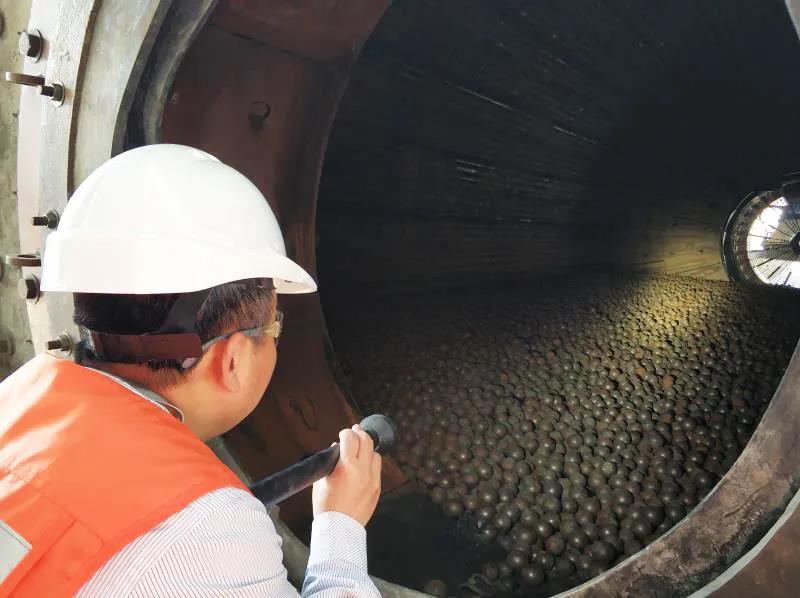
3. Out-of-roundness, blockage of the ore discharge window affecting ore discharge, large fluctuations in processing capacity and grinding fineness
The concept of out-of-roundness is: (maximum diameter - minimum diameter of the ball) ÷ average diameter * 100%, exceeding 7% is considered out-of-round. Its cause analysis: First, the hardness of the grinding steel ball is unreasonable, and both the peeling and chipping caused by crushing and grinding ore and the out-of-roundness phenomenon caused by impact deformation occur. Out-of-round steel balls gather at the ore discharge end of the mill and are forcibly discharged along with ore pieces through the ore discharge window. When the diameter of one side of the out-of-round steel ball is smaller than the diameter of the ore discharge window, and the other side is larger than the diameter of the ore discharge window, it is easy to get stuck in the ore discharge window. After a period of time, some ore discharge windows are blocked, seriously affecting normal ore discharge, and the amount of ore processed drops sharply, making it necessary to shut down and replace the ore discharge window, thus affecting normal production, shortening the normal service life of the lining, and also having a certain impact on the fineness of crushing and grinding. Second, the out-of-roundness phenomenon of steel balls in the original mill is serious, and the newly added steel balls wear down irregular out-of-round balls while wearing down ore, so when the wear is uneven, the new products are also prone to out-of-roundness. According to literature records, when the out-of-round rate in the mill does not exceed 5%, the impact on grinding is minimal.
4. Affecting liner life
The pursuit of high-hardness steel balls intensifies the wear on the liners during the crushing and grinding process, causing early failure of the wave patterns or lifting bars. Higher hardness causes greater damage to the liners after occasional impacts, often leading to cracks causing slurry leakage, or even liner cracking and chipping and failure. Designing the hardness of steel balls, materials, and liners to match the ore hardness and ore size and other operating conditions is a scientific approach.
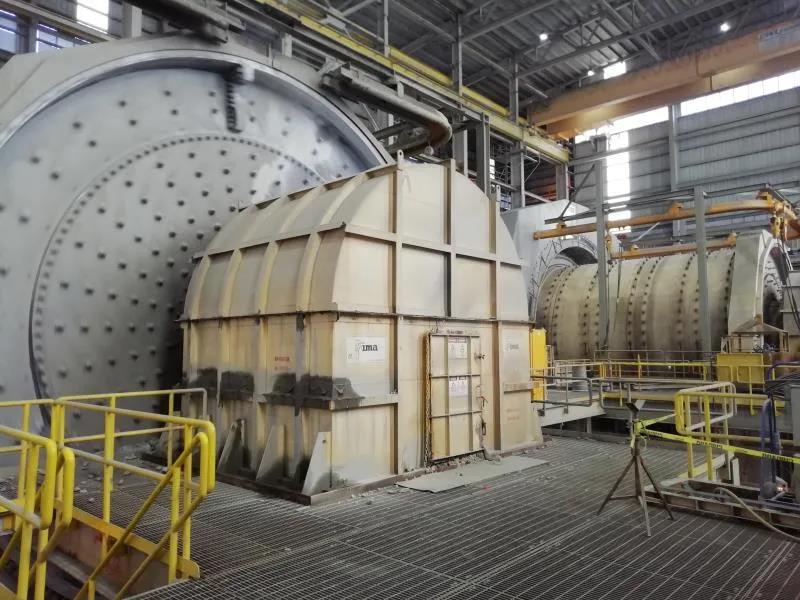
5. High mill power consumption
If the grinding balls can maintain a near-spherical shape during the operation of the mill, the contact area between them and the liner is relatively small, the friction is small, the height to be lifted is relatively low, and the initial velocity when impacting downwards is faster, the kinetic energy of crushing ore is larger, the efficiency is high, and the unit power consumption is relatively small. If the out-of-roundness is serious, or even a polyhedron appears, it will increase the friction between the liner and the steel ball, and the friction between the individual out-of-round steel balls will also increase. The height to be lifted will be greater than that of the non-out-of-round steel balls before they can be thrown down, inevitably leading to an increase in the power consumption of the motor. Secondly, too many failed products reduce the efficiency. Many mines increase the existing filling rate to ensure high efficiency. Conversely, the higher the filling rate, the higher the power consumption, creating a vicious cycle.
For example, a 11.0*6.3m semi-autogenous grinder with a power capacity of 17000kw, the actual operating power of steel balls with serious roundness issues averages around 14460kw, while the actual operating power of normal steel balls is around 13941kw, with an average difference of 519kw and an annual power consumption difference of 4091796kw.
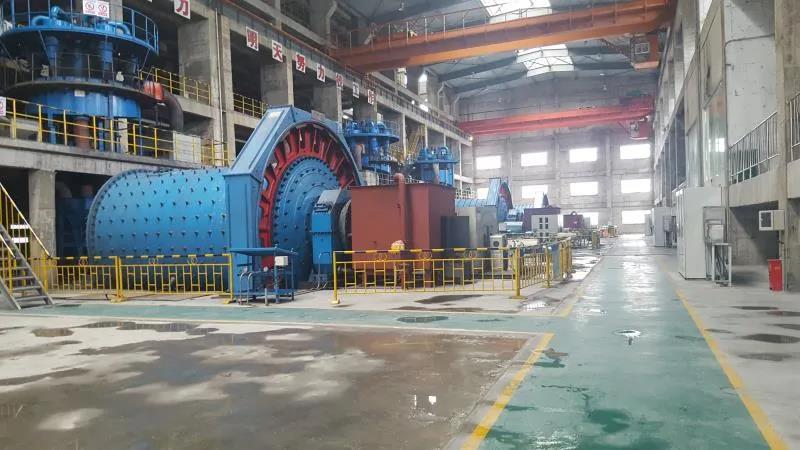
VI. Low mineral single-particle dissociation degree and low concentrate grade
Whether the grading of large, medium, and small steel balls in the mill is unreasonable, or the roundness, breakage, and failure seriously affect the distribution of qualified mineral particle sizes. Ideally, it should be an olive-shaped distribution, but in reality, most mines have a dumbbell-shaped distribution. The poor particle size distribution is the main reason for the low single-particle dissociation degree. Poor particle size distribution: a large proportion of small balls and failed balls will lead to increased over-grinding or mudding; a large number of large balls, out-of-round balls, and broken balls will lead to under-grinding. At the same time, it directly affects the quality of the concentrate.
VII. Low ore processing capacity
For the same grinder with the same steel ball filling rate, the higher the wear resistance, the more grades of large, medium, and small steel balls formed during the entire service life, the more steel balls, and the greater the probability of crushing ore, the greater the ore processing capacity. For example, for an 11.0*6.3m semi-autogenous grinder with a steel ball filling rate of 12%, the number of steel balls with two different wear resistances differs by more than 3500. In other words: every time the semi-autogenous grinder operates for one cycle, there is a difference of 3500 impact work probabilities. With a speed of 9.5 revolutions per minute, there is a difference of 47.8 million times per day, and 17.2 billion times per year, and the ore processing capacity will inevitably have a gap.
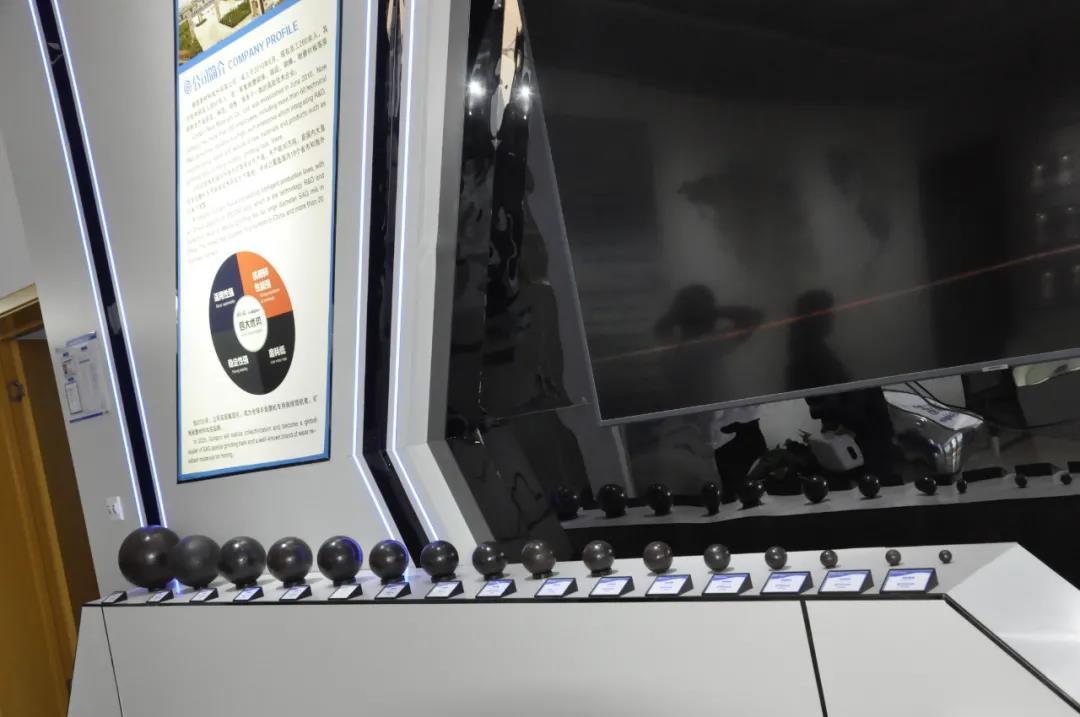
Who would have thought that a small steel ball would have such a big impact. If we don't have enough understanding of steel balls, it may lead to a lot of resource waste. Therefore, Gangnuo New Materials Co., Ltd. organized a special research team to conduct in-depth research in many mines for many years, and discovered the huge role of steel balls in grinding.
Gangnuo New Materials Co., Ltd. has many years of experience in steel ball design and production, and can help you solve the above phenomena. We look forward to your call for communication and sincerely hope that you will visit our company for inspection, communication, and guidance during your busy schedule.
If you need us to communicate with your mine, please feel free to contact us! Contact information: 18903204866 Yin Wenxing
The entire technical R&D team of Gangnuo New Materials Co., Ltd. is waiting for your good news!